STATUS QUOtes — 20150605

“It’s better to be in the arena, getting stomped by the bull, than to be up in the stands or out in the parking lot.” — Steven Pressfield

“We should take care not to make the intellect our god; it has, of course, powerful muscles, but no personality.” — Albert Einstein

“No man’s credit is as good as his money.” — Edgar Watson Howe

“My mother always told me I wouldn’t amount to anything because I procrastinate; I said ‘Just wait.’” — Judy Tenuta

Founding Father of HDR Photography – Trey Ratcliff

High Dynamic Range (HDR) photography often divides the photography community. A number of people dislike it and some do so passionately. Others love it and use it to its extreme and do so passionately. Then there are the moderates, like me, who use it in a realistic fashion to bring out the shadow details and to tone down the highlights.

Perhaps the greatest proponent of HDR photography and some might say the “founding father” of the technique, is Trey Ratcliff. I have been following Trey’s blog for years and I admire much of his work.

If you are interested in photography in general and HDR photography in particular, I know this TEDX talk by Trey Ratcliff will be of interest. He has a powerful, unique and often poignant story to tell. ALSO…watch the background as he uses many of his HDR photos to keep the audience’s attention.


From the YouTube Video Narrative…

“Many people may have artistic heroes. Trey, as a master of imagery is the creator of so many visuals that burn into our mind and particularly arrest our own notion of what is real. Trey meanders with us through important moments in his life, beginning with some difficulty and then realising in hindsight that sometimes you must ‘stumbl(e) into your own greatness’.”

STATUS QUOtes — 20150604

“Reflect upon your present blessings, of which everyone has many.” — Charles Dickens

“There is nothing in this world that does not have a decisive moment” — Cardinal de Retz

“We may be afraid to care too much, for fear that the other person does not care at all.[ed]” — Eleanor Roosevelt

“I wouldn’t touch the metric measuring system with a 3.048m pole.” — Anonymous

STATUS QUOtes — 20150603

“Happiness isn’t something you experience; it’s something you remember.” — Oscar Levant

“A lot of people try to change their behavior, but if you don’t change your beliefs, then whatever it is that motivated your behavior will find another way to come out sideways.” — Neil Strauss

“He who does not hope to win has already lost.” — Jose Joaquin Olmedo

“Finally, a guy who says what people who aren’t thinking are thinking.” — Jon Stewart

Shouldn’t the Forehand Always Take the Middle?

If you follow the Pickleball Guru, Prem Carnot, then you probably know that he has a book, Smart Pickleball, (which I have read and recommend) which he now announces has somewhat of an error. (More about this later)

In his recent post:

The Surprising Strategy to Make Sure You Cover Every Shot at the Net

The PB Guru explains why, the majority of the time, a doubles team only has to cover two-thirds of the court at a time. He lists the most important elements of this strategy as follows:

  • The middle third is ALWAYS being covered.
  • You and your partner form an impenetrable WALL on the 2/3 of the court that you ARE covering. (Sounds pretty impressive, doesn’t it?)
  • You’re mentally prepared to cover that extra 1/3 if your opponents go for a low-percentage shot to that area.
  • You’re in a position to pounce when your opponents get out of position.


To get
the rest of the details, read his article and share it with your partner(s). No sense in only one-half the team knowing about the two-thirds strategy.
The Surprising Strategy to Make Sure You Cover Every Shot at the Net

Also remember…once in a while the other team is going to get one past you in that difficult and open one-third, but it should be a low percentage shot and if you follow Prem’s additional advice, it shouldn’t happen often.

Prem’s Pickleball book, Smart Pickleball, is a good one and I have read it from cover-to-cover and some parts more than a couple of times. Apparently there is an error in the book and the PB Guru takes this opportunity to set the record straight as follows:

“If you’re REALLY paying close attention to what I say, you’ll come back to me and say, “But, Prem, on page 66 of your book, you have us mark the center of each half of the court and you tell us to stay that far apart. That’s 10’ apart, not 6’ or 7’. So which is it?”

See the the Pickleball Guru’s post linked above for the correct answer and solution.

So if you have the book, print out the correction and if you have the e-Book version, which I have, annotate it.

I hope you found this post of interest and that you can practice these strategies.

See you on the courts!

Dripping Springs Trail – OMDP NM, Las Cruces, NM

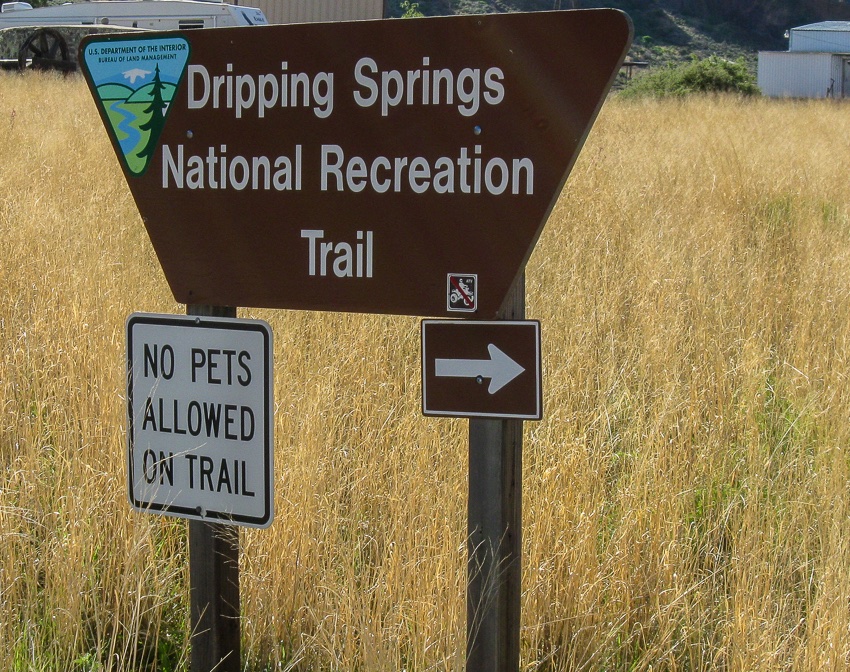
Dripping Springs National Rec. Area Sign

In early May my wife and I visited Las Cruces, New Mexico to hike in the surrounding mountains. One area of focus was the Organ Mountains-Desert Peaks National Monument which received this new federal designation about one year ago.
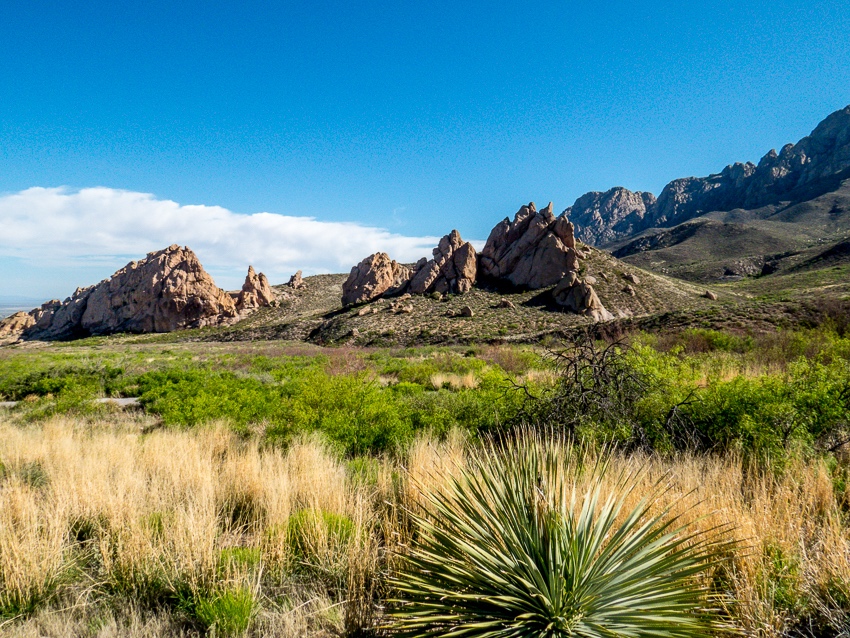
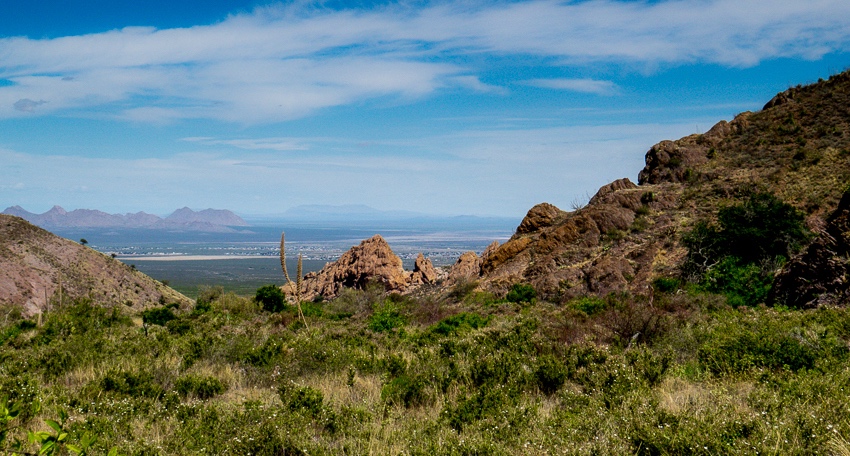
View of the surrounding mountains

This (pictured above) was one of the first views after leaving the visitor center. Las Cruces is to the left of the picture from this vantage point. We had no idea how well we would come to know these particular hills over the next several days.
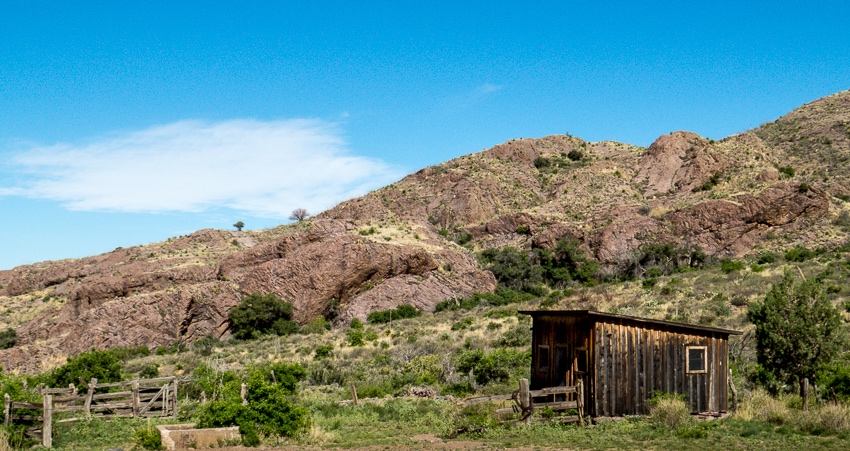
Livery and other buildings date back to the late 1800s

As we made our way toward the springs, wooden buildings that were erected in the late 1800s became visible. The fact that anything remains of them today considering weather, potential vandalism and the ravages of nature is remarkable enough.
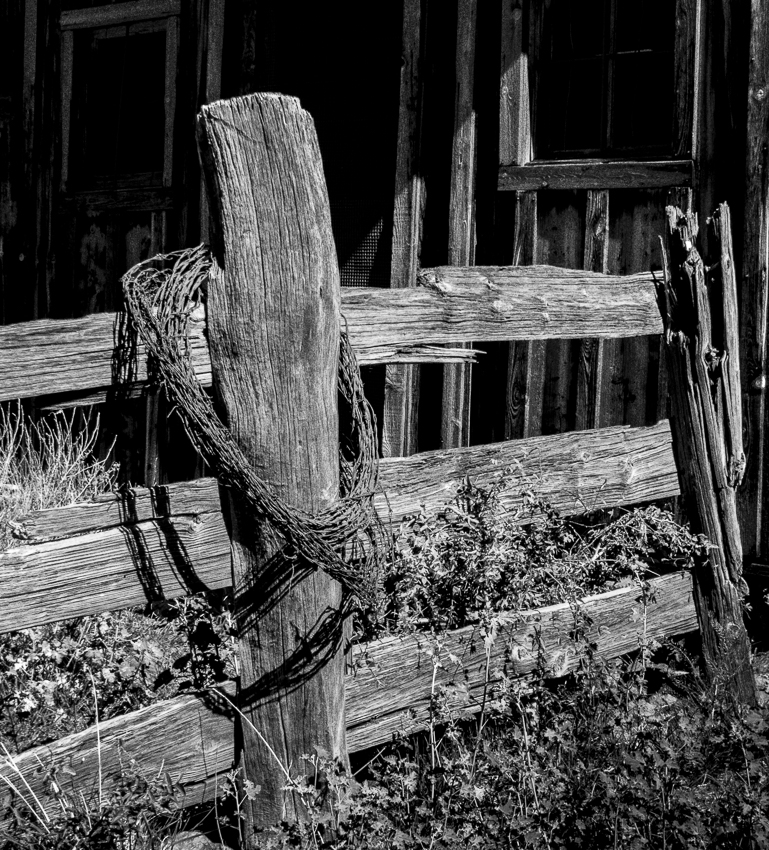
I couldn’t help myself in rendering this section of fence in what I hope is an appropriate black and white setting to pay homage to the past.

The structures were part of Van Patten’s Mountain Camp which included a historic hotel. These wooden buildings served as the stables, chicken coop, etc. for the resort. The hotel operated until the 1920’s. This area is now under the care of the Bureau of Land Management (BLM). The buildings have been stabilized, but remain fragile on site exploration by the public is not permitted.
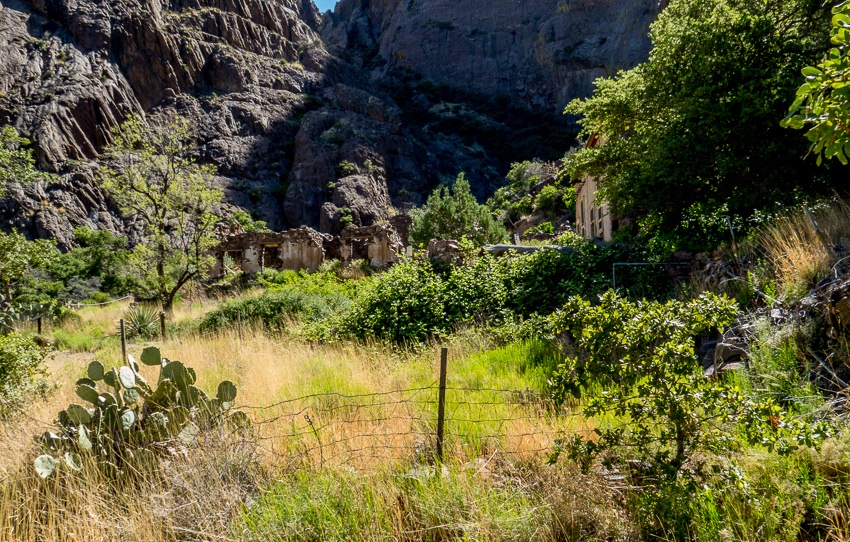
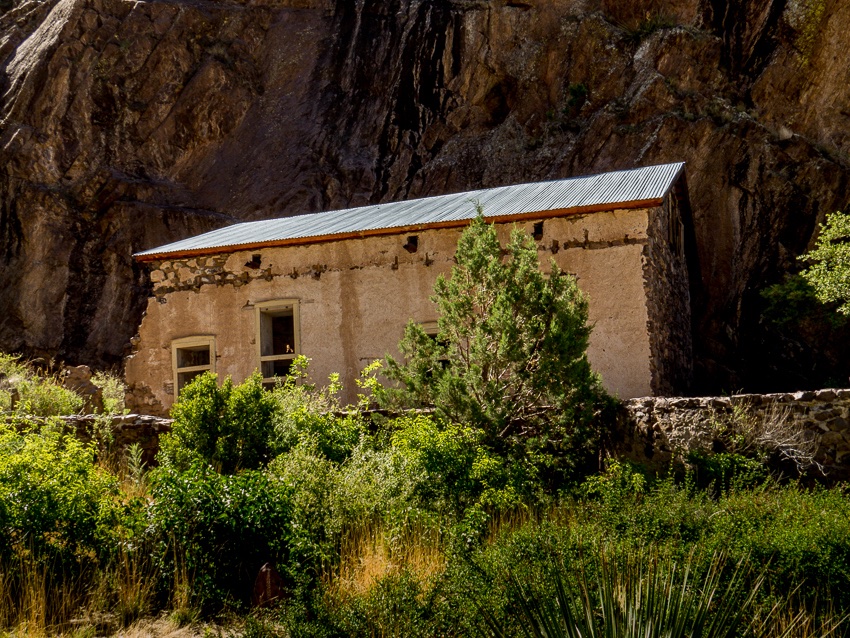
The Mountain Camp hotel was a two-story, 14-room facility with dining and recreation facilities. The rock was harvested from the canyon and used to build the hotel. The resort was popular enough that in 1906, 18 more rooms were added.
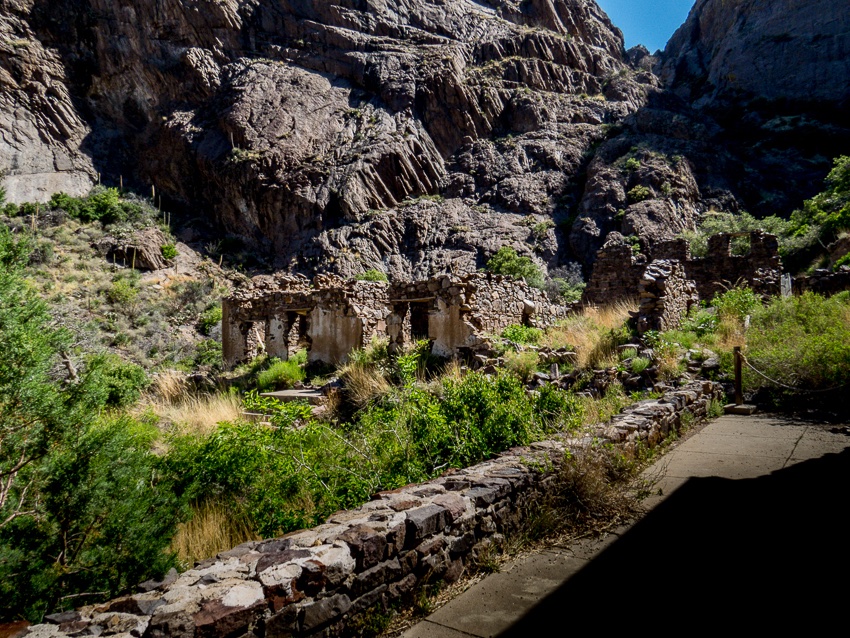
Ruins of the hotel as seen from the porch of the main building

This is a view from the porch of what was most likely the main building.
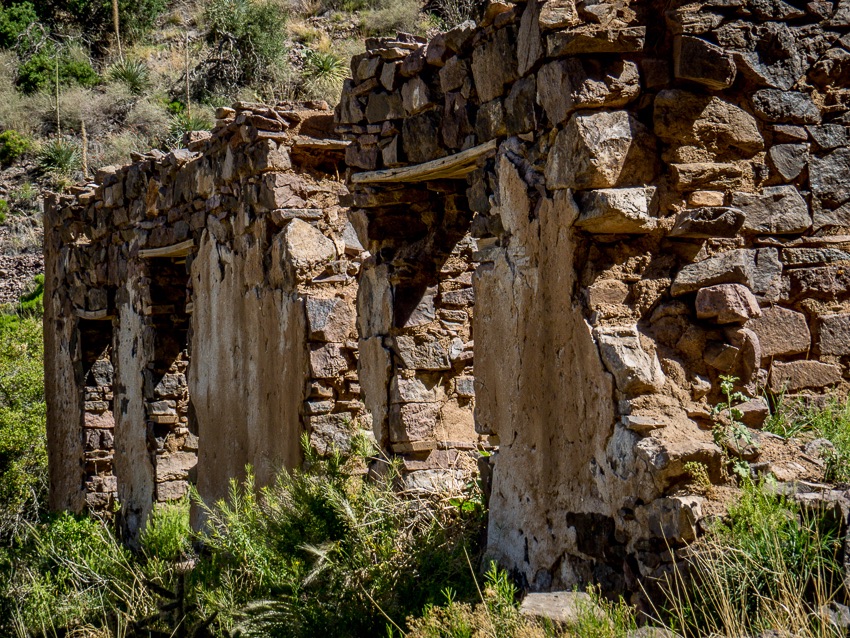
Ruins of the hotel as seen from the porch of the main building

This is a closer view of the stabilized, but still precarious rock and mud walls of the hotel.

The resort was sold in 1915 to Dr. Nathan Boyd, a native of Illinois, who used it as a tuberculosis sanatorium. The property underwent a series of sales subsequently and in 1988 came under the jurisdiction of the BLM.
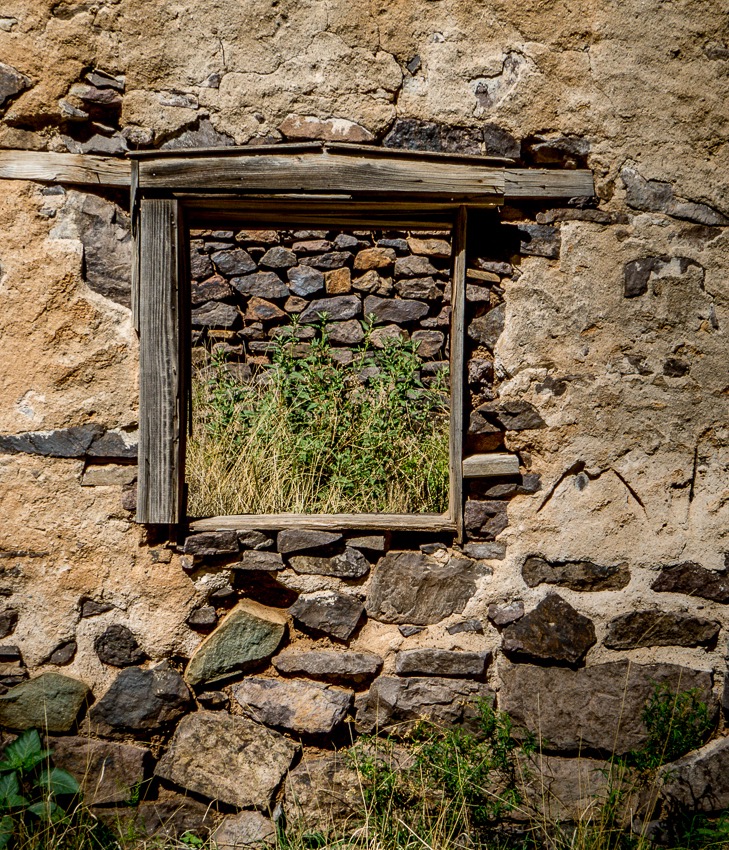
Time and nature have had their way with the ruins

ABOVE – Looking through the frame of what once was a window, we can see how time and nature are reclaiming the land as grass and weeds are now growing in a former interior space.
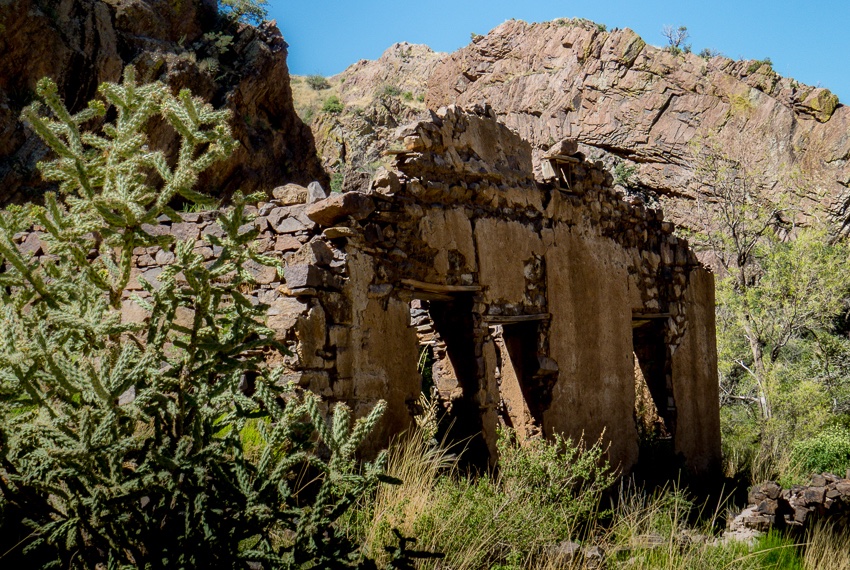
A series of old wall and window frames remain

These relics of the past stand as sentinels of yesteryear while they sadly greet modern hikers and nature lovers.

Below is a picture of the “dripping spring” which was running this day and threw off a fine mist as we approached the man-made rock wall which I suspect served as a type of dam.
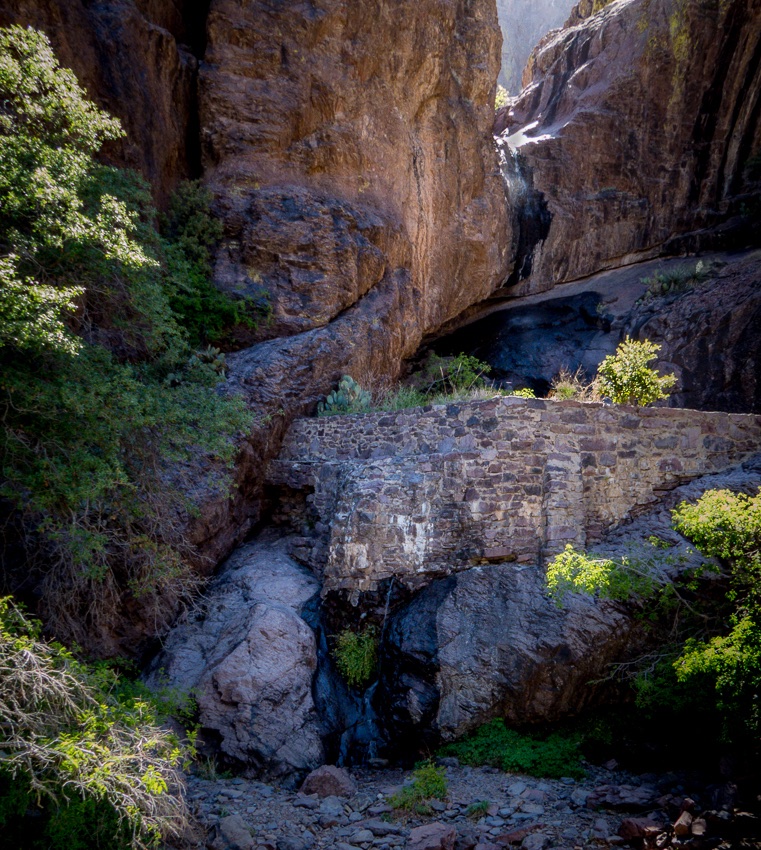
The dripping spring from which the trail gets its name

As we retraced our steps down the mountain trail towards the visitor center, we passed the stables again and I was drawn to this old fence post with rusted, yet quite functional bolts. If only it could talk!
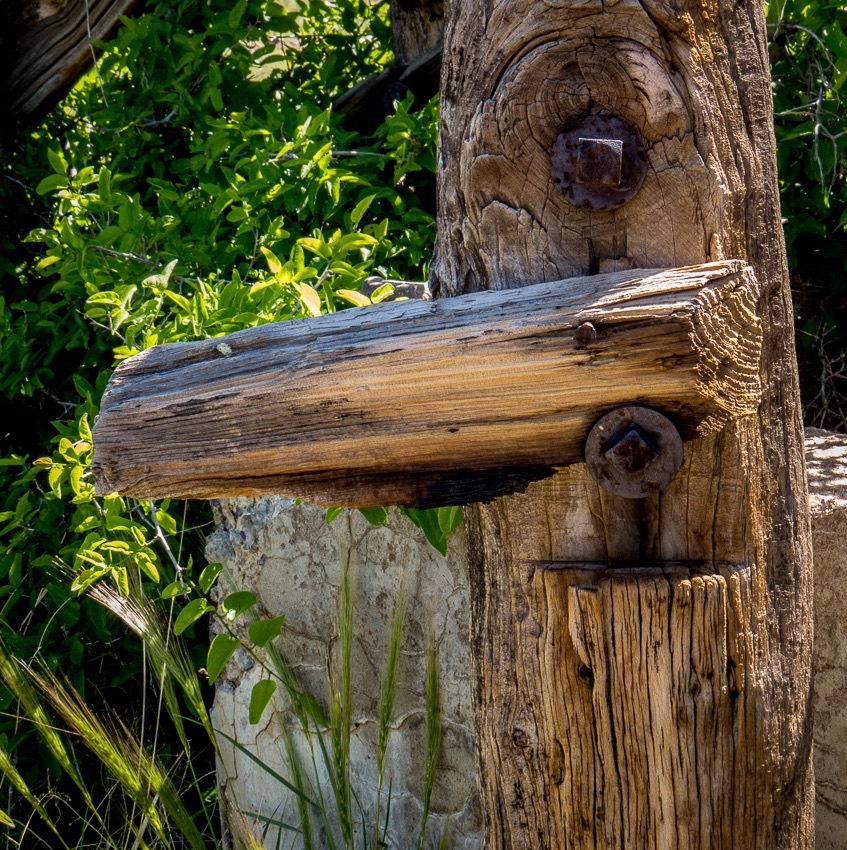
Close up of fence post and hardware

We were treated to this vista of Las Cruces from near the junction of the Dripping Springs trail and the connecting path to Fillmore Canyon.
A final view as we descend from the Dripping Springs Trail

More of the New Mexico adventure will follow…

Learn more on your own:

Dripping Springs Natural Area – BLM

Las Cruces Off The Beaten Path

STATUS QUOtes — 20150602

“Freedom begins between the ears.” — Edward Abbey

“We all get the same amount of ice. The problem is some of us get it during the summer while others receive it in the winter.[ed]” — William ‘Bat’ Masterson

“Speak clearly, if you speak at all; carve every word before you let it fall.” — Oliver Wendell Holmes

“The trouble with learning from experience is that you never graduate.” — Doug Larson

When Graduation Is More Like Halftime

From the YouTube video site:

“Published on May 29, 2015

Class song & “Kaipahua Kura

For those of you who messaged me for more info:

This is the senior class of 2015 at Kahuku High School located in Hawaii more specifically the North Shore of Oahu. The seniors learned this number in 2 days…they did a great job.

@8:43 they performed the “Kaipahua Kura” which is their very own “Haka” or “war dance” from the Maori people of New Zealand.

Kahuku High is a very culturally diverse school with lots of school spirit and pride. Good luck to them!”


Let’s salute the students, teachers, parents and advisors who had the courage to be different!

Congratulations Kahuku Class of 2015

Alien Life on Other Planets or Stars


Aliens - Image courtesy Interdimensional Guardians via Flickr Creative Commons
Aliens – Image courtesy Interdimensional Guardians via Flickr Creative Commons


I have often thought that if there are “billions and billions” of stars/planets out there that other forms of intelligent life must exist. After all, what are the odds we would be the only form of life capable of thinking, inventing and exploring? If I had to bet, I would be likely to put my money on other creative life forms out there somewhere.

Then the question arises: Why Aren’t The Aliens Here Already? I mean really, how slow can they be? I would suspect that some other intelligent life would be more advanced than humans on earth and therefore should be here by now. Well…perhaps not.

Adam Frank of 13.7 cosmos & culture wrote the following in an article posted on NPR’s website:

“For today, however, let’s just consider the one answer that really matters for us, the existential one that is very, very freaky indeed: The aliens aren’t here because they don’t exist. We are the only sentient, technological species that exists in the entire galaxy.

It’s hard to overstate how profound this conclusion would be.

The consequences cut both ways.”

Read the rest of the story Why Aren’t The Aliens Here Already?.